‘윤의 대통령직 붕괴는 놀라운 기회를 만들어낼 수도 있다’
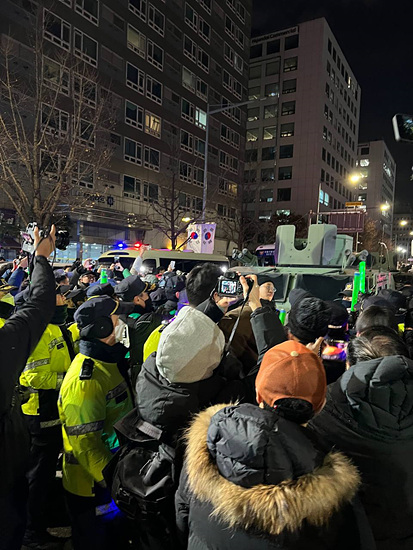
윤석열 대통령이 독재권력을 탈취하려 시도할 때까지, 트럼프 대통령의 임박한 재취임에는 적어도 일종의 기대감이 있었습니다. 두 사람 모두 권위주의적 경향이 있는 논란이 많은 우익 극단주의자입니다. 그들은 개인적으로 잘 맞을 가능성이 있었고, 트럼프와 문재인보다 더 잘 어울릴 가능성이 있었습니다. 윤석열은 워싱턴의 민주와 공화 정당 모두에게 널리 호감을 받았습니다. 좋은 개인적 분위기가 동맹관계를 안정시켰을 수도 있습니다.
그러나 윤의 극적인 자살골은 트럼프의 도착에 앞서 대한민국(ROK)을 본질적으로 무소속으로 만들었습니다. 아마도 윤은 국회에서 탄핵이 성공적으로 진행된 후 해임될 것입니다. 설령 헌법재판소가 미국 탄핵에서 미국 상원과 비슷하게 행동하여 윤을 축출(逐出)하지 못하게 하더라도 그의 대통령직은 사실상 끝난 것입니다. 그의 정당이 그에게 사임을 압박했기 때문입니다.
과시적인 정치적 패배자로서 그는 트럼프의 관심은 커녕 애정도 끌지 못할 것입니다. 미국을 방문하라는 초대는 없을 것이고, 노래방에서 부를 수 있는 기회도 없을 것입니다.
이러한 결렬은 오래된 관계를 재고할 수 있는 환영할 만한 기회를 제공합니다. 워싱턴은 항상 서울에서 보수적인 매파를 선호해 왔습니다. 민주당과 공화당을 포함한 미국의 대통령들은 오랜 독재자 박정희를 다루었습니다. 조지 W. 부시 행정부는 북한에 대한 보다 부드러운 접근방식을 선호했던 좌파 성향의 김대중 대통령과 불화가 있었습니다. 바이든 행정부는 북한을 비난하고, 일본과 화해하고, ‘아메리칸 파이’를 당당하게 부른 윤에게 더 이상 행복할 수 없었을 것입니다. 워싱턴 정책커뮤니티는 대체로 미국 정부의 뒤를 따랐습니다. 한국 내 수십 년 동안의 군부독재 기간 동안 인권에 대한 우려가 표명되었지만, 동맹유지가 여전히 가장 중요했습니다.
이러한 지정학적 실용주의는 윤의 자살골 시도에 대한 반응에서 극적으로 드러났습니다. 바이든 행정부는 충격적인 사건에 대해 아무런 비판도 하지 않았습니다. 앤소니 블링컨 국무장관은 진부한 성명을 발표했습니다. "우리는 윤 대통령이 명령을 철회하겠다는 성명을 환영합니다. ... 우리는 정치적 의견 불일치가 평화롭게 그리고 법치주의에 따라 해결되기를 계속 기대합니다." 블링컨은 기념비적 탄핵 결의안에 대하여 윤과 국회 간의 의견 불일치를 지적했을 수도 있습니다.
미국의 주요 싱크탱크도 비슷하게 반응했습니다. 칼 프리드호프 가 포린 폴리시 에서 썼듯이, "윤은 2022년 5월 취임 이후 워싱턴 외교정책 기관의 사랑을 받아왔습니다." 한국의 좌파(?,중도)에 대한 거의 자동적인 적대감과 수구파에 대한 거의 숭배는 윤의 행동에 대한 절제된 반응 또는 어떤 경우에는 전혀 반응이 없음으로 반영되었습니다. NK 뉴스의 채드 오캐럴은 "많은 주요 기관과 워싱턴 D.C. 전문가들이 한 것처럼 윤의 민주주의 침식이라는 까다로운 문제보다 원활한 관계를 우선시하면서, Beltway Korea 전문가들은 현장의 현실과 단절을 보였습니다" 라고 경고했습니다. 민주주의에 대한 바이든 행정부의 공표된 헌신은 오랫동안 잊혀진 민주주의 정상회담에 대한 언급이 사라진 것처럼 확실히 사라졌습니다.
그러나 워싱턴은 이제 압도적인 입법부 다수당의 지지를 받는 새롭고 훨씬 더 자유주의적인 대통령을 마주하게 될 가능성이 큽니다. 윤의 생존은 정족수 문제를 지닌 헌법재판소에 달려 있습니다. 헌법재판소의 구성원이 9명 중 3명이 부족한 상황에서 일부 분석가들은 헌법재판소가 판결을 내릴 수 없을 것이라고 믿었지만 헌재 판사들은 판결을 내릴 것이라고 밝혔습니다. 유죄 판결이 가장 유력한 결과입니다. 윤을 구하는 것은 매우 인기가 없을 것이고 국가 정부를 마비(痲痹)시킬 것입니다.
헌법상 대통령 퇴임 후 2개월 이내에 선거가 치러져야 하며, 좌파가 쉽게 이길 가능성이 매우 높아 보입니다. 윤이 간신히 이긴 후보 이재명은 출마할 수 있다면 이길 수 있지만, 그의 출마를 방해할 수 있는 형사고발에 직면해 있습니다. 한국 정치의 독성을 감안할 때, 누가 당선되든 적지 않은 보복을 진행할 가능성이 큽니다. 정치적 격변은 조만간 끝날 가능성이 없습니다.
1월 20일에 트럼프 대통령이 등장합니다. 2017년, 그가 이길 것이라고 예상하지 못했던 선거 이후 혼란스러운 전환을 거쳐 취임했을 때와 대조적으로, 이번에는 주요 보직을 임명을 하는데 놀라운 규율을 보였습니다. 정책 개발에 비슷한 노력이 기울여진다면, 트럼프의 임명자들은 취임 첫날부터 그의 우선순위를 따를 것입니다.
핵심무대는 트럼프가 재취임 전에 합의를 이루려고 바이든 행정부가 서둘렀던 특별조치협정 재협상일 것입니다. 하지만 그는 굴하지 않을 가능성이 높고, 윤의 정부는 대가로 무언가를 줄 의향이 있는 듯했습니다. 윤은 트럼프의 기대를 완화할 수 있기를 바랐을지 모르지만, 트럼프는 미국의 주둔에 대해 연간 100억 달러를 청구할 것이라고 말했습니다.
이재명 또는 다른 민주당 인사는 트럼프와 공통점을 찾고 많은 비용을 지불할 가능성이 적습니다. 한국이 거부하면 트럼프는 미국의 주둔(駐屯)을 재고할 수 있습니다. 처음에는 협상전략으로만 제기되었다 하더라도 대통령으로 선출되기 전부터 문제를 제기했기 때문에 이를 밀고 나갈 것입니다.
현상유지에 의문을 제기하는 것은 서울과 워싱턴의 거의 모든 사람을 두렵게 합니다. 미국이 남한의 방위에 보조금을 주지 않는 세상을 상상할 수 없기 때문입니다. 따라서 철수제안은 미국 정책 입안자와 한국인 사이에서 일치된 반대에 직면할 것입니다.
그러나 현상유지를 주장하는 사람들은 거의 모든 면에서 적보다 우월한 번영하고 인구가 많은 산업국가가 자신의 방어를 제공할 수 없는 이유를 만족스럽게 설명하지 못했습니다. 남한은 북한이 배치하는 모든 것을 능가할 수 있는 능력이 분명히 있습니다.
동시에 워싱턴은 평화 시에 연간 약 2조 달러의 적자를 내고 있으며, 부채에 대한 이자로 연간 1조 달러 이상을 지불하고 있습니다. 미국의 GDP 대비 부채 비율은 1946년에 기록된 106%에 가까워지고 있으며, 세기 중반까지 두 배가 될 수 있습니다. 워싱턴은 어떻게 다른 많은 국가에 이렇게 관대한 방위 보조금을 계속 지불할 수 있을까요? 현재 한국에 배치된 군대 규모를 철수하거나 축소하면 병력모집 문제와 예산압박 모두 완화될 수 있을 것입니다.
덜 논란이 되는 것은 북한에 대한 새로운 접근방식일 수 있습니다. 트럼프가 김정은과 맺은 관계는 그의 첫 임기 동안 가장 창의적인 외교적 이니셔티브였습니다. 그는 북한 지도자가 자신을 "그리워한다"고 주장했지만, 김정은의 반응은 그다지 따뜻하지 않은 것으로 판명되었습니다. 트럼프는 첫 행정부에서 여러 직책을 맡았던 리처드 그레넬을 대북특별임무 사절로 임명할 계획이며, 그가 그러한 노력을 이끌 수도 있을 것입니다.
북한에 강경한 입장을 취한 윤은 그러한 트럼프 정책에 저항할 가능성이 큽니다. 반면 진보적(?중도적) 대통령들은 꾸준히 평양과 관계를 맺으려고 노력해 왔습니다. 김대중, 노무현, 문재인은 모두 북한 지도자들과 정상회담을 가졌습니다. 진보(중도)주의자가 윤을 대체한다면 트럼프는 평양에 대한 새로운 접근방식에 기꺼이 동참할 파트너를 찾을 수도 있습니다.
분명히 초기의 제안은 북한여행 금지를 해제하고 연락사무소를 개설하고, 적절한 시기에 대사관으로 승격할 것을 제안하는 것입니다. 북한이 세계에 문을 열도록 격려하는 것은 미국의 이익입니다. 게다가 두 정부 간에 제한적이기는 하지만 꾸준히 대화를 시작하는 것이 유용할 것입니다. 사실, 적대국과 대화하는 것이 친구와 대화하는 것보다 더 중요합니다. 협상은 양보가 아니라 좋은 정책입니다. 두 정부는 여전히 실질적으로 많은 것을 달성하지 못할 수도 있지만, 적어도 진전의 가능성은 더 커질 것입니다.
트럼프가 김정은을 만나려는 의지는 워싱턴에서 여전히 과소 평가 받고 있습니다. 76년 동안 미국과 북한은 서로를 노려보며 끔찍한 전쟁을 치르고 가끔씩 총격전을 겪었습니다. 연이은 미국 대통령들은 평양이 핵무기를 개발해서는 안 된다고 웅장하게 외쳤습니다. 하지만 오늘날 평양은 수십 개의 핵무기를 보유하고 있으며 미국을 표적으로 삼을 의도로 대륙간 탄도 미사일을 개발하고 있습니다. 워싱턴은 한국을 보호하는 데는 성공했지만 북한을 개혁하고 냉전을 종식시키는 데는 실패했습니다. 이제 새로운 것을 시도할 때가 되었습니다.
윤의 대통령 임기는 항공모함 착륙에 실패한 후 불타는 항공기 잔해(殘骸)와 유사합니다. 유일한 해결책은 윤을 배 밖으로 밀어내는 것입니다. 그러나 그 뒤를 따르는 것은 명확하지 않습니다. 트럼프가 다시 취임하면 그의 머리 속엔 많은 것이 있을 것입니다. 그러나 한반도의 미래와 같은 중요한 것을 대체하는데 그에게 성급한 행동을 허용해서는 안 됩니다. 한국은 그의 관심을 필요로 합니다. 그가 본능을 따른다면 트럼프는 미국의 정책을 보다 나은 방향으로 바꿀 수 있습니다.
글 | Doug Bandow, Cato Institute의 수석 연구원으로 레이건 대통령시절 특별보좌관을 지냈으며 Tripwire: Korea and US Foreign Policy in a Changed World를 포함한 여러 권의 책을 썼다.
출처: 포린-폴리시, 2024년 12월 19일.
Can Trump Work With South Korea’s Left?
A collapsing presidency may create surprising opportunities.
By Doug Bandow, a senior fellow at the Cato Institute.
FP. DECEMBER 19, 2024, 1:05 PM View Comments
Until South Korean President Yoon Suk-yeol disastrously attempted to seize dictatorial power, there was at least one silver lining in the impending arrival of President Donald Trump: Both are contentious right-wing extremists with authoritarian tendencies. They seemed likely to get on personally, potentially better matched than Trump and Moon Jae-in. Yoon was broadly liked by both parties in Washington. Good personal vibes might have steadied alliance relations.
Yet instead, Yoon’s dramatic self-immolation has left the Republic of Korea (ROK) essentially leaderless in advance of Trump’s arrival. Most likely, Yoon will be removed following a successful impeachment in the National Assembly. However, even if the Constitutional Court, acting rather like the U.S. Senate in an American impeachment, saves Yoon from ouster, his presidency will be effectively over—not least because his own party has pressured him to resign. As an ostentatious political loser, he would not attract Trump’s interest, let alone affection. No invitation to visit the United States would be likely—and definitely no karaoke sing-alongs.
The breakdown offers a welcome opportunity to reconsider a relationship gone stale. Washington has always preferred conservative hawks in Seoul. A succession of American presidents, Democrats as well as Republicans, dealt with long-time dictator Park Chung-hee. The George W. Bush administration was famously at odds with left-leaning president Kim Dae-jung, who favored a softer approach to North Korea.
And the Biden administration couldn’t have been happier with Yoon, who reviled the North, reconciled with Japan, and sang “American Pie” with aplomb. The Washington policy community has largely followed in the U.S. government’s wake. Although human rights concerns were expressed during decades of dictatorship, the maintenance of the alliance remained paramount.
This geopolitical pragmatism was on dramatic display in the reaction to Yoon’s attempted autogolpe. The Biden administration offered no criticism of the shocking events. Secretary of State Antony Blinken put out a banal statement: “We welcome President Yoon’s statement that he would rescind the order. … We continue to expect political disagreements to be resolved peacefully and in accordance with the rule of law.” Blinken might as well have been discussing a disagreement between Yoon and the National Assembly over the wording of a commemorative resolution.
Leading U.S. think tanks responded similarly. As Karl Friedhoff wrote in Foreign Policy, “Since his inauguration in May 2022, Yoon has been a darling of the Washington foreign-policy establishment.” The almost automatic hostility to South Korea’s left and near veneration of the right were reflected in the restrained reaction—or, in some cases, the lack of any reaction at all—to Yoon’s action. NK News’ Chad O’Carroll warned, “In prioritizing smooth relations over thorny questions of democratic erosion, as many key institutions and experts in D.C. appear to have done, Beltway Korea experts showed a disconnect with realities on the ground.” The Biden administration’s professed commitment to democracy vanished as surely as mention of its long forgotten democracy summit did.
However, Washington is now likely to face a new and much more liberal president backed by an overwhelming legislative majority. Yoon’s survival depends on the depleted Constitutional Court. With the court short three of nine members, some analysts believed that it might be unable to render a verdict, but the judges indicated that they would proceed. Conviction is the most likely outcome. Saving Yoon would be highly unpopular and leave the national government crippled.
Constitutionally, an election is required within two months of the president’s departure—and the left seems likely to win with ease. The candidate whom Yoon narrowly defeated, Lee Jae-myung, should win if able to run, but he faces criminal charges that could derail his candidacy. Given the toxicity of South Korean politics, whoever is elected is likely to engage in more than a little score-settling. The political convulsions aren’t likely to end any time soon.
Enter President Trump on Jan. 20. In contrast with 2017, when he took office after a chaotic transition following an election that he apparently didn’t expect to win, this time the Trump operation has shown surprising discipline in making appointments. If similar efforts are being put into policy development, Trump’s appointees may pick up his priorities from day one.
Center stage will be renegotiation of the Special Measures Agreement, which the Biden administration rushed through in an attempt to settle before Trump’s return. However, he is unlikely to be deterred, and the Yoon government appeared willing to give something in return.
While Yoon might have hoped he could temper Trump’s expectations, the latter spoke of charging $10 billion a year for America’s military presence. Lee, or another Democratic Party president, is less likely to find common ground with Trump and to pay more. If rebuffed by South Korea, Trump might reconsider America’s military presence. Even if initially advanced only as a negotiating tactic, he might go further, having raised the issue long before he was elected president.
Questioning the status quo horrifies almost everyone in both Seoul and Washington, as they cannot imagine a world in which the United States does not subsidize the South’s defense. Thus, any withdrawal proposal would face concerted opposition among U.S. policymakers as well as Koreans.
Yet advocates of the status quo have never satisfactorily explained why a prosperous, populous industrial state, which transcends its adversary on almost every measure of power, is unable to provide for its own defense—at least a non-nuclear one. South Korea surely is capable of overmatching whatever the North deploys.
At the same time, Washington is running deficits of around $2 trillion annually in peacetime and paying more than $1 trillion a year in interest on its debt. Uncle Sam’s debt-to-GDP ratio is approaching the record 106 percent set in 1946 and could double by mid-century. How can Washington continue paying for such generous defense subsidies to so many other nations? Withdrawing and demobilizing troops, like those currently deployed in South Korea, would ease both recruiting challenges and budget pressures.
Less contentious might be a renewed approach toward North Korea. Trump’s engagement with Kim was the most creative diplomatic initiative of his first term. He has mused that the North Korean leader “misses” him, though Kim’s response proved less than warm. Trump plans to appoint Richard Grenell, who held several positions in the first administration, as envoy for special missions, and he might lead such an effort.
Yoon, who has taken a hard line against North Korea, likely would resist such a policy. In contrast, progressive presidents have consistently sought to establish relations with Pyongyang; Kim Dae-jung, Roh Moo-hyun, and Moon Jae-in all held summits with North Korean leaders. If a liberal replaces Yoon, Trump might find a willing partner for a new approach to Pyongyang.
An obvious starting offer would be to drop the ban on travel to the North and propose opening liaison offices, with the expectation of upgrading them to embassies in due course. It is in America’s interest to encourage North Korea to open to the world. Moreover, it would be useful to begin steady, even if limited, dialogue between the two governments. In fact, it is more important to talk with adversaries than it is with friends. Negotiation is not a concession; it’s good policy. The two governments might still fail to achieve much substantively, but at least there would be a greater possibility of progress.
Trump’s willingness to meet Kim remains underappreciated in Washington. For 76 years, the United States and North Korea have glowered at each other, fighting a terrible war and suffering through occasional firefights. Successive U.S. presidents grandly intoned that Pyongyang must not develop nuclear weapons. Yet today it possesses scores of them and is developing intercontinental ballistic missiles, with the intention of targeting the United States. Washington has succeeded in shielding South Korea but has failed in reforming North Korea and bringing the Korean cold war to an end. It is time to try something new.
Yoon’s presidency resembles the flaming aircraft wreckage after a bungled carrier landing. The only solution is to push it overboard. But what follows isn’t clear. Much will be on Trump’s mind when he takes office again. However, he should not allow the urgent to displace the important, such as the future of the Korean peninsula. The Koreas require his attention. If he follows his instincts, he could transform U.S. policy for the better.
글로벌웹진 NEWSROH www.newsroh.com

 뉴욕 :
뉴욕 :  파리 :
파리 :  서울 :
서울 :